The Website That Taught Me I Could Build
A vacation-rental website took me from paying for a generic experience to building and operating a direct-booking system with AI.
Published on
Author
David Marshall
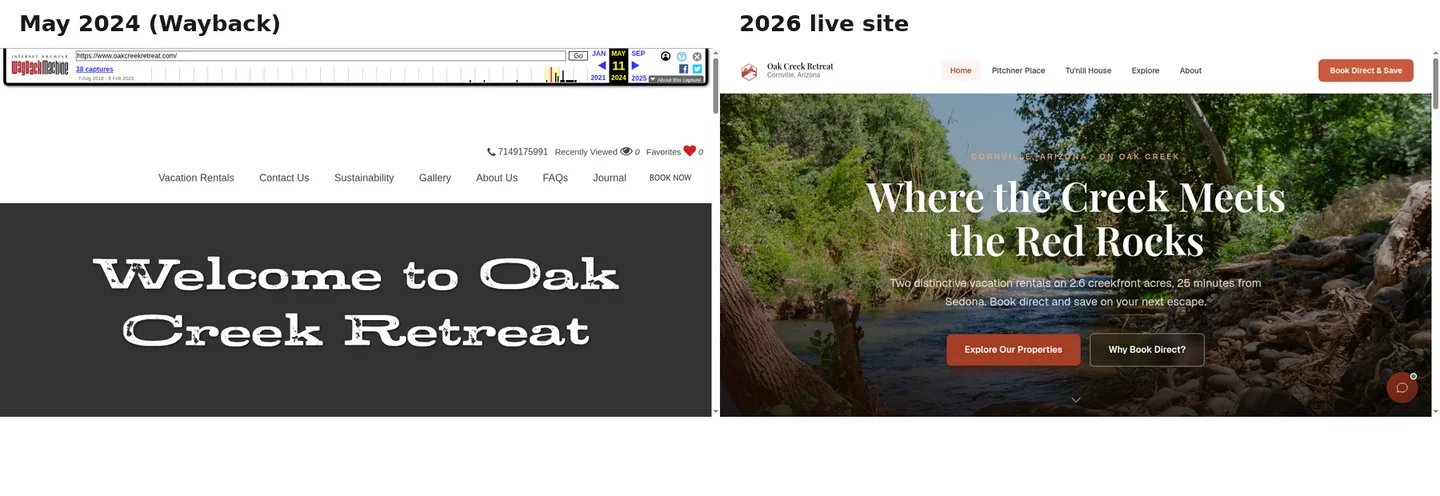
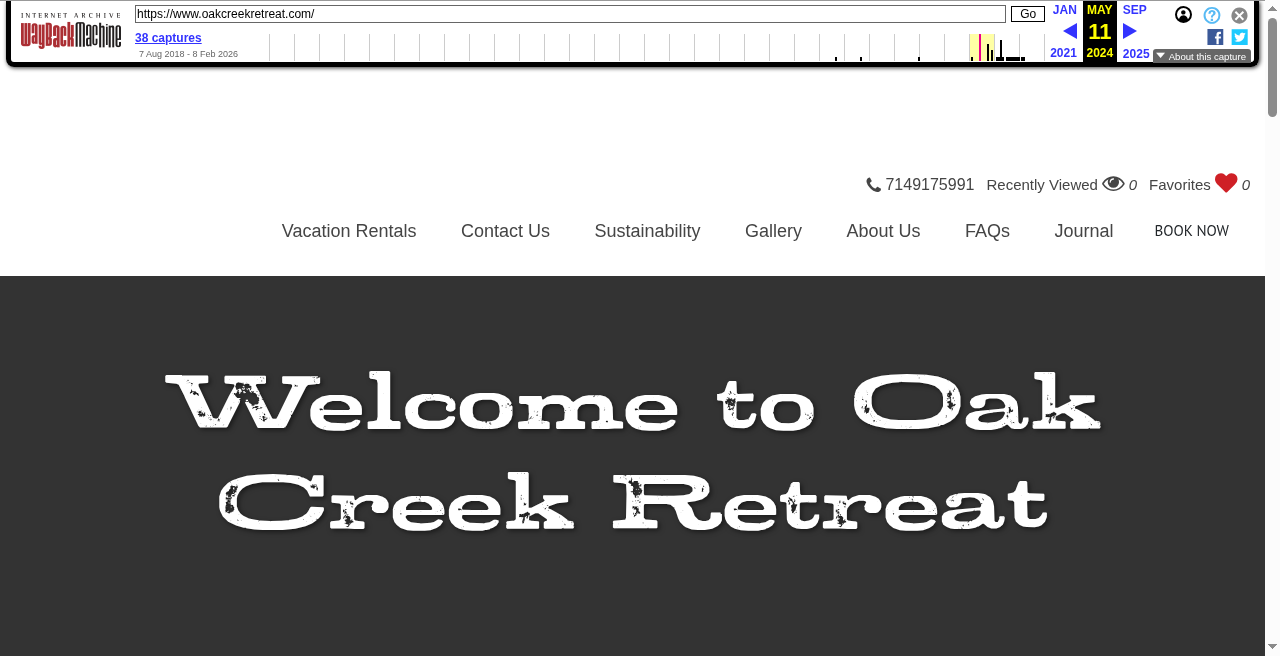
The Wayback Machine preserves a copy of my old website.
The snapshot is dated May 11, 2024. It has a logo, a booking button, property filters, testimonials, and a page for each of our rentals.
The website was real. It worked.
I still hated it.
It was the generic design and the painful process to make even simple updates. All of which cost more money. The website was the true meaning of “cookie-cutter”, and I couldn’t make the changes to achieve my vision. I knew what I wanted, but I didn’t yet know how to do it.
The “cookie-cutter” conflict was the catalyst that drove me into the world of AI assisted development and design.
I didn’t know better so I outsourced
Oak Creek Retreat is our vacation-rental business outside Sedona, Arizona. When I first launched, I was working full-time at Amazon during the week and driving from Phoenix to Sedona on Thursday or Friday night. I would spend the weekend working on the property, 15+ hr days, then drive back and do it again the next week.
I felt strongly about a dedicated website to tell the story of my property. My Property Management Software, Hostfully, had a list of website dev vendors, I picked the one with the best reviews. I paid, worked with the PM, accepted the “best they could do” finished site, and moved to the next problem.
I bought a website that had the right guts. But it lacked soul.
By September’24, I started asking a question I originally avoided: what if I built the next version myself?
I didn’t have any experience, I wasn’t a designer, I definitely wasn’t a developer. But, I had a creative point of view, a business that needed a better customer experience, and a growing curiosity about what AI could help me learn.
Like most things in my life, that was enough to start.
AI gave me a path
AI became a dedication in late 2022. Like most, those early experiences were surface-level: asking questions, summarizing information, exploring what the tools could do.
When I started exploring building with AI, that is when the shift happened.
The process was awkward compared with today’s tools (what a few years can do in the world of AI). I would move between an IDE, a browser, and an AI conversation. I copied code back and forth. I asked what a section did, changed it, broke it, and asked another question. Then repeated the process section by section.
I dove into the world of UI/UX design. Typescript. Copy. How to tell a story on a landing page that moved a potential customer to click “buy.”
I was not trying to become a software engineer. I was learning just enough to solve the next problem in front of me.
I used HubSpot’s domain, hosting, and editing tools. Why…because I heard it mentioned a lot on podcasts I listened to. I learned page by page and section by section. Working a few hours in the early mornings and on the weekend, the replacement site took roughly three months to launch.
It was not a masterpiece of website design. But the process was educational.
I learned design by making design decisions. I learned calls to action by connecting them to an actual booking path. I learned integrations by reading developer docs to connect the site to Stripe and Hostfully.
The process taught me the link between the code and a customer action. A button wasn’t just a button. It had to send a guest where I needed them to go. A form’s function didn’t stop at “submitted.” It had to move the guest along in the sales funnel.
This was the first time I embraced AI as a tool and a teacher. It could help me create the next section. But even more important, it was my personal tutor, instructing me and educating me along the way.
The first booking was a moment
I published the new site when I was ready.
The first booking was the moment that made the three months worth it.
I never created something online that put dollars in my pocket until now.
The first booking didn’t cause me to stop. It caused a little voice in my head to whisper “what else can you build?”
The second rebuild was faster
I learned the vocabulary with the first site: layout, content, calls to action, payments, property data, APIs, memory…the list goes on.
I rebuilt Oak Creek Retreat again in 2026, I had new tools and new capabilities. I added AI agents and a web stack connected to the booking system. The repository gives me a recorded window. The Phase 1 foundation was committed on March 4, and the complete website refresh was committed on March 6. The commits are 42.35 hours apart. That records an implementation window. It does not mean I worked straight through, and it is not the public launch time.
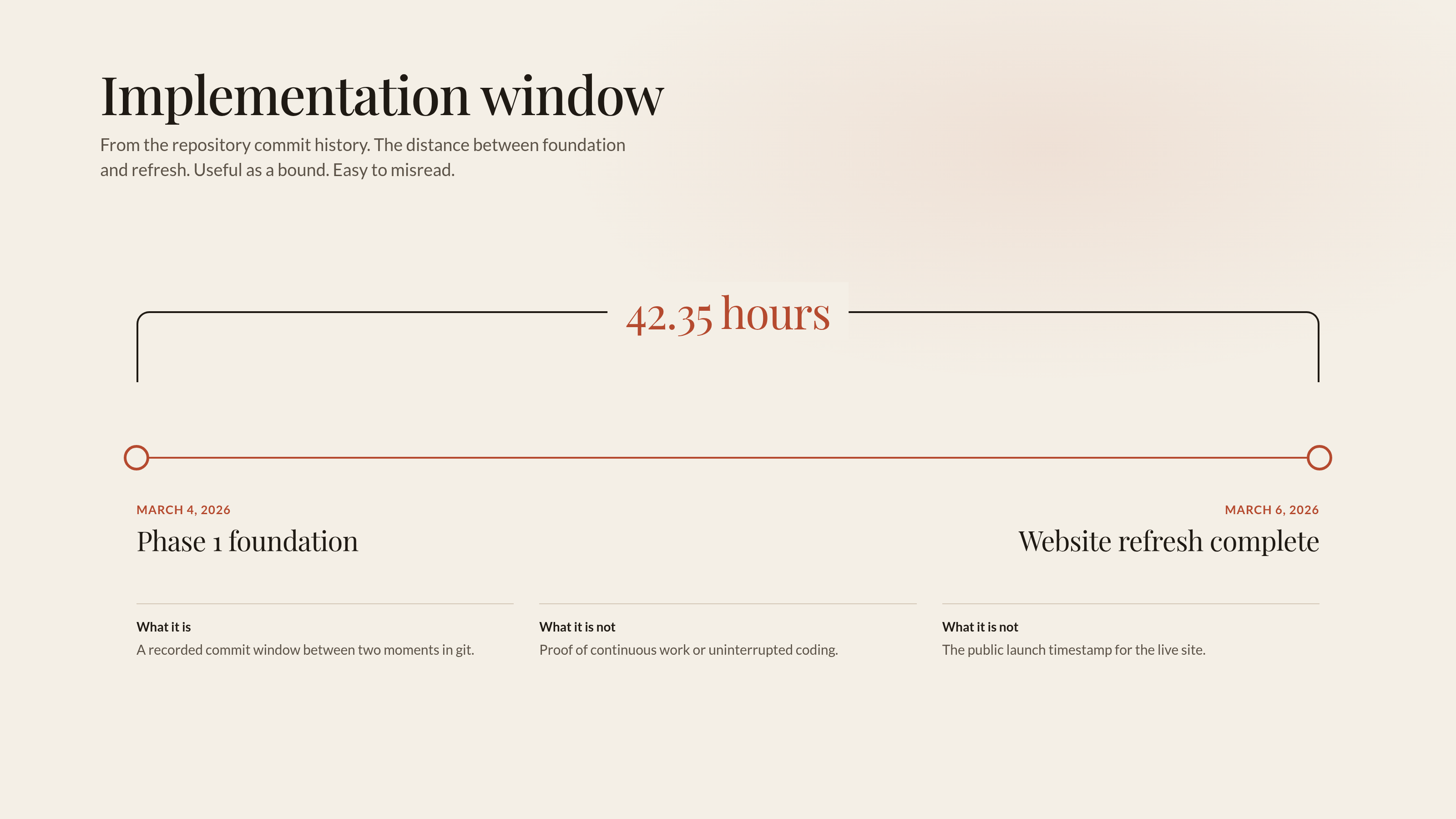
A little faster than my first website.
That lines up with my memory of a two- or three-day rebuild.
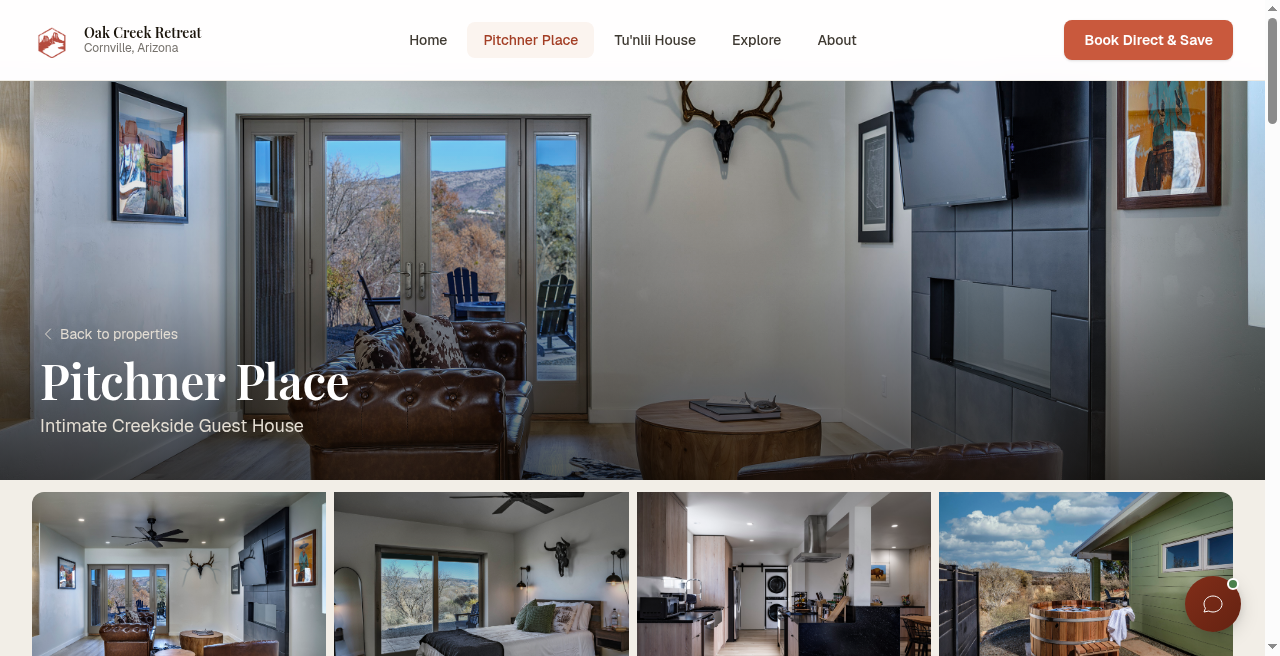
The new site included a direct-booking experience, property pages, a gallery, local recommendations, analytics, and an AI concierge “Sierra.”
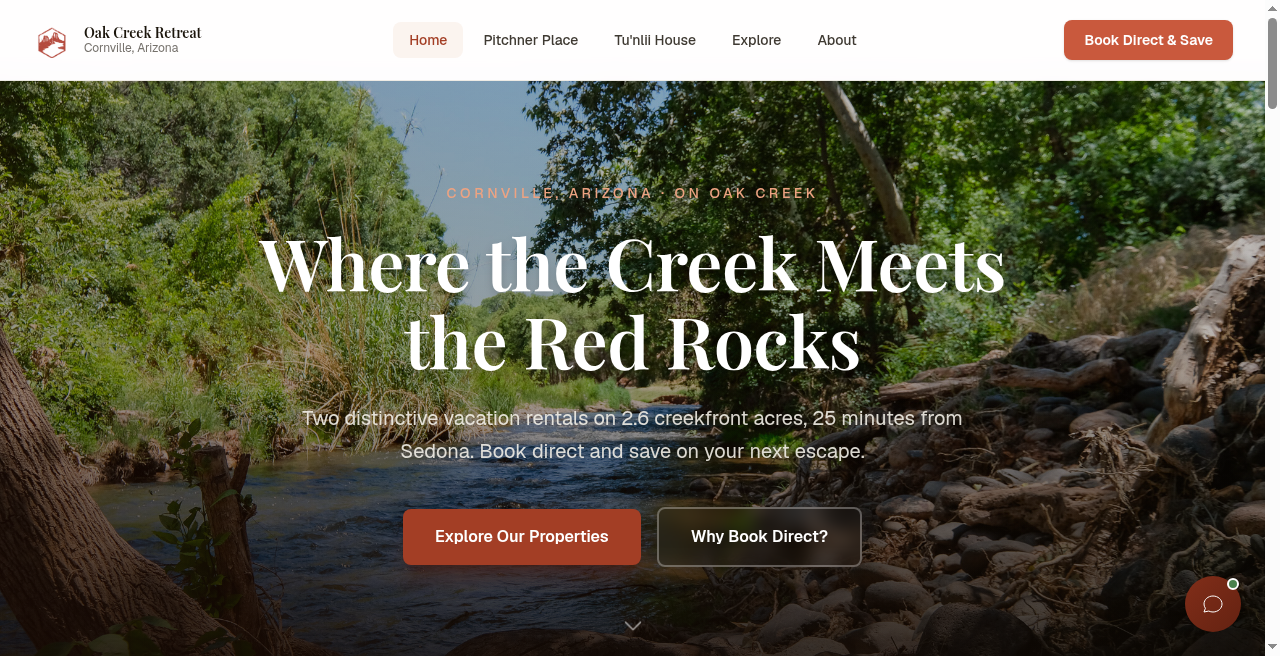
I was faster because I was more experienced and the tools improved drastically.
I understood why a guest needed a clear booking path. I knew which property details mattered. I’ve experienced the questions from potential customers due to unclear CTAs and incomplete handoffs. The tools moved faster because I wasn’t starting from zero.
What happens when it breaks?
The latest site taught me an important lesson after it looked finished.
At one point, a price check was creating a temporary Hostfully inquiry. That inquiry triggered an email to the customer, but never completed a booking. The pricing screen appeared to work, but the workflow behind it was wrong.
The solution sounds a little techy. I changed the quote path so a price check did not create a lead. The checkout path still needed a real inquiry, but a quote did not.
The bug was another valuable experience. It forced me to distinguish between a screen that looks correct and a system that functions as intended across every connected service.
AI helped me write the code. Operating the system taught me what the code does.
I no longer think of building as a single act called “development.” It is a loop:
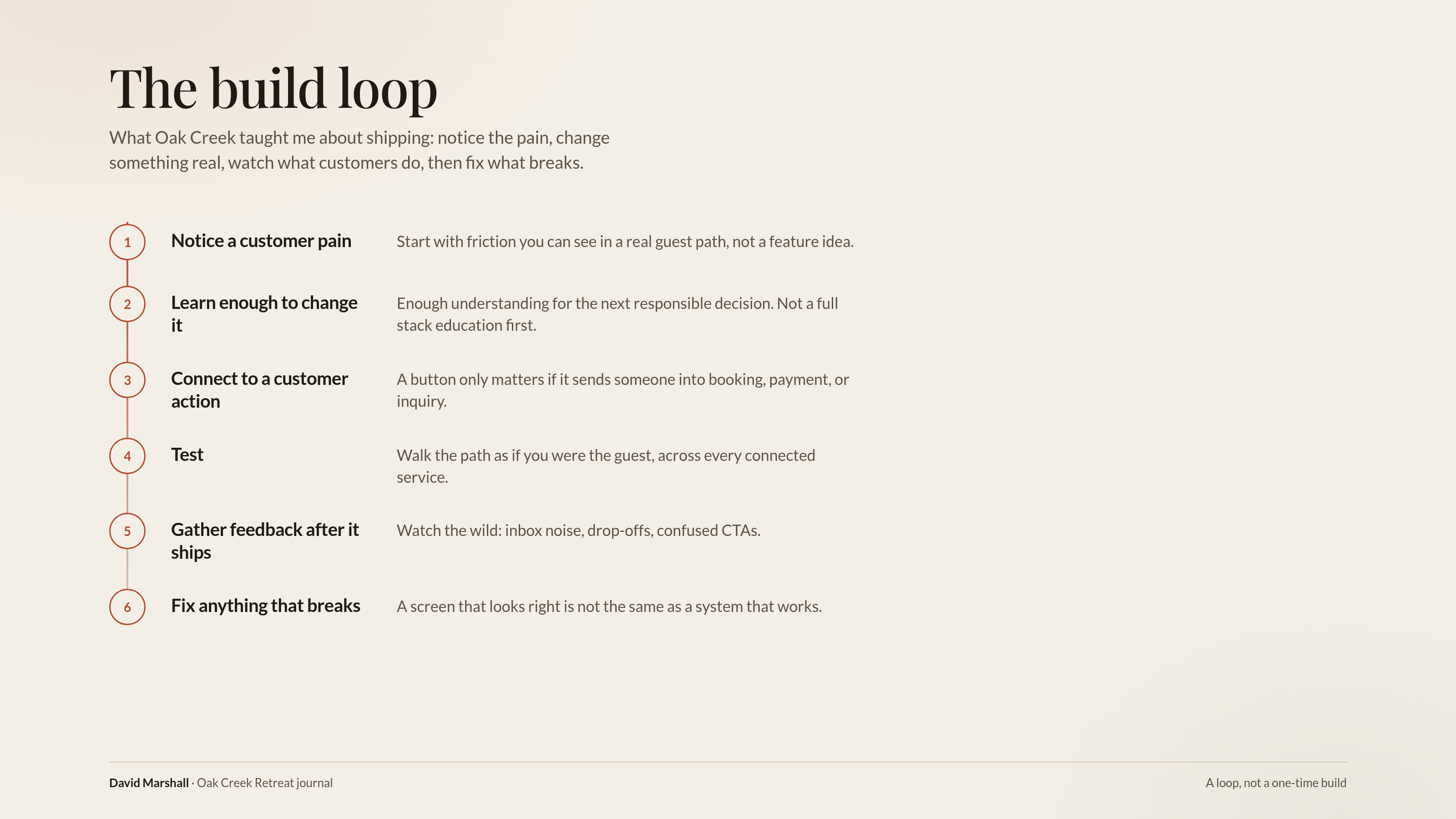
- Notice a pain point for customers.
- Learn enough to change it.
- Connect the change to a real customer action.
- Test
- Gather feedback after it ships.
- Fix anything that breaks.
What Oak Creek gave me
I didn’t become an engineer because of Oak Creek Retreat. It taught me how to take an idea and create a working system.
It changed how I think about qualification.
At first I believed a full understanding of the tech stack was needed before I touched the first page. Building the site taught me to learn by doing. I needed enough understanding to make the next decision responsibly, then enough discipline to test what changed.
If you have a real problem, a willingness to learn, and a way to observe how it performs, you can shrink the distance between idea and implementation.
The “cookie-cutter” website became the project that taught me I could build.
What is the real thing you would try to build if you stopped waiting to feel qualified first?
Share:
Building something with AI? Let's compare notes.
No pitch, no newsletter, just real talk about building with AI.
Latest reflections
The Website That Taught Me I Could Build
A vacation-rental website took me from paying for a generic experience to building and operating a direct-booking system with AI.

The most useful app I've built with AI has three users
A personal family day-coordination app with three users and no AI brain. How deterministic rules, voice-to-review-to-save, and a bounded problem made tiny software worth building.